








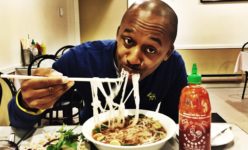



I love Thailand the way some people love a person they met on a long layover and never forgot. Not the Instagram version of love that feels like a sanitized, over-filtered affair, but the kind that comes from heat-soaked buses, plastic stools, burnt knuckles from chili oil, and the humility of not knowing what the hell you’re doing and figuring it out anyway.
I love Thailand as an eater first. As someone who understands that food is not content, it’s language. It’s memory. It’s hierarchy and history and geography on a plate. I love the way a woman who has never asked my name and couldn’t pronounce it if I gave it knows exactly how hungry I am by how I order. I love that meals don’t need translation if you shut up long enough. I love that spice is not a personality trait or a dare. It is the baseline, the weather, the truth. I love that Thai food does not bend easily, and when it does, it is because someone forced it.
And I’ve already tasted the forcing.
In what used to be my favorite pocket of Chiang Mai, the food tastes different now. Softer. Muted. Apologetic. I’ve watched vendors preemptively ask, “Not spicy?” before a request is even made, as if bracing for impact. I’ve watched chili disappear, fish sauce get shy, balance collapse. Not because Thais changed, but because Americans complained. Because Yelp and Google Reviews arrived before curiosity. Because someone decided discomfort was oppression.
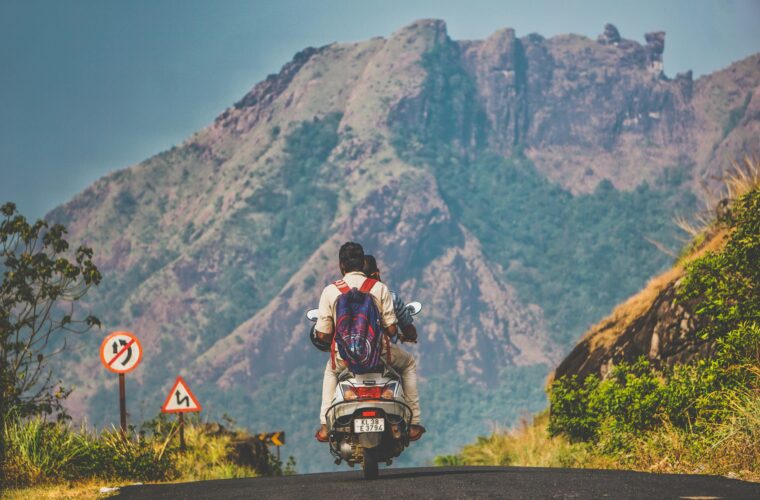
I love Thailand as an adventurer. Not the GoPro kind, but the bus kind. The kind where you hop on something with no Wi-Fi, ride five hours through terrain and traffic that teach you patience, hop off somewhere you didn’t plan to stay, and make a life for a few days anyway. I love Thailand because it still allows that. Because it hasn’t fully decided that every arrival must be managed, monetized, translated, or softened for liability reasons.
Yet even that is changing.
Roadblocks now appear in places that never needed them. Police stopping scooters not because chaos reigns, but because foreigners do. Because Americans don’t bother to get international licenses, don’t learn rules, don’t respect systems, and then act shocked when systems respond. Scooter rentals now come with laminated warnings written in English first. Prices split cleanly into “Thai” and “Farang.” Handwritten signs turn into printed ones. Flexibility becomes bureaucracy. Trust becomes policy.
I love Thailand as an anthropologist and a lifelong learner of human behavior. I love watching how people move through space when no one is watching them for profit. I love noticing who eats first, who pours the drinks, who sits closest to the door. I love understanding that temples are not backdrops and monks are not props and silence is not an aesthetic choice. I love that Thailand still contains worlds that do not perform themselves for outsiders, if you let them be.
But outsiders rarely let things be.
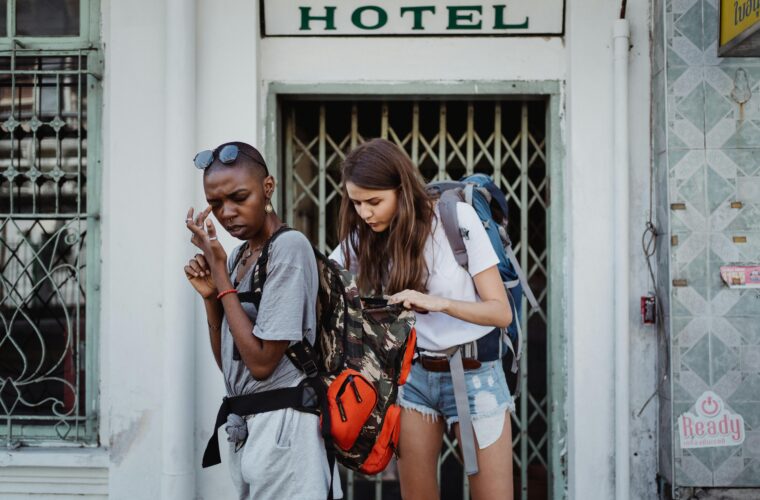
I’ve watched neighborhoods turn into menus. Streets once held together by routine now punctured by smoothie bowls and LED signs. Coffee shops designed for photographs, not conversations. Condos that sit empty half the year, owned by people who call themselves “expats” because “immigrant” makes them uncomfortable. Rent climbing. Locals pushed outward. Familiar faces replaced by transient ones who ask, within days of arrival, where the “expat community” is.
That question alone tells me everything.
If you need an expat community, you are not here. You are hiding. You are trying to experience Thailand without being changed by it. You want the climate and the cost of living and the aesthetic, but not the surrender. Not the listening. Not the humility of being a guest.
And now, within a single month, five different people who do not know each other have asked me for advice on moving to Thailand. Not visiting. Moving. As if it is the next logical step after watching the same ten TikToks on loop. As if Thailand is a solution. A backdrop. A loophole.
This is how places die.
This is how Tulum died. Not suddenly, but politely. With intentions. With yoga studios and “conscious” cafés and foreigners insisting they loved it too much to leave it alone. Until it became Collins Ave with palm trees and a wellness vocabulary. Until locals could no longer afford to live where they were born. Until the soul was replaced with access.
Thailand is not asking to be saved. It is asking to be respected.
So I am pleading, without romance, without apology: please do not do to Thailand what you did to Tulum. Do not turn it into Cancun with better lighting. Do not turn it into Playa Del Carmen with a meditation playlist. Do not sand down its edges so you can feel comfortable.
If you come, come changed. Eat what is put in front of you. Learn the rules before you break them. Get the license. Lower your voice. Stop asking where people like you live. Stop demanding translation before attempting comprehension. Stop confusing affordability with entitlement. Stop calling yourselves expats as if that absolves you from responsibility.
And if you don’t want to do any of that—if you want ease without effort, familiarity without friction, Thailand without Thailand—then keep moving. Cancun is ready. Playa Del Carmen has room. Miami Beach is already waiting.
Leave Thailand special.
Some places are not meant to be optimized. Some places survive only if we love them quietly enough to let them remain themselves.